What to Pack for the Psych Ward: For Yourself or Someone You Love
A practical guide to the small things that can bring comfort, dignity and connection during a psychiatric hospital stay.
Being admitted to a psychiatric ward is not something most people feel prepared for.
Whether you are going in yourself, packing a bag for someone you love, or visiting someone who has been sectioned, it can be hard to know what is actually useful.
When I was first sectioned in 2020, I couldn’t have visitors because of lockdown. That made the whole experience feel even more surreal. I was very unwell, very vulnerable, and I had no real concept of who I was. Not being able to be close to my family and friends in person made me feel even more disconnected from myself.
The second time I was hospitalised, in 2023, I was allowed visitors and that made a huge difference.
Visitors helped me feel grounded. They gave me comfort and reassurance that I was going to be okay. I don’t remember every specific moment because I have memory gaps from when I was in hospital, but I do remember feeling very loved.
And sometimes, that is what gets you through.
This guide is not about packing the perfect hospital bag. It’s about the small things that can help someone feel a little more human in a very difficult environment.
Why small things matter
On a psychiatric ward, small things can become very important.
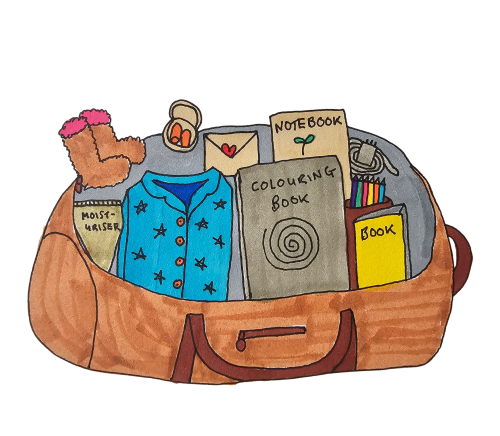
A clean pair of socks. A soft hoodie. A notebook. A cup of herbal tea. A handwritten letter. A familiar book. A photo of someone you love.
These things don’t fix everything. They don’t make hospital easy, but they can help create tiny moments of comfort, dignity and connection.
When I first arrived in hospital in 2020, I really wish I’d had a notebook and pen with me. I got one later from my brother, but at the beginning I didn’t have anything to write in or help ground me.
Journalling can be a way to process things, or simply a way to put thoughts somewhere outside of your head. Even if what you write doesn’t make sense later, it can still help in the moment.
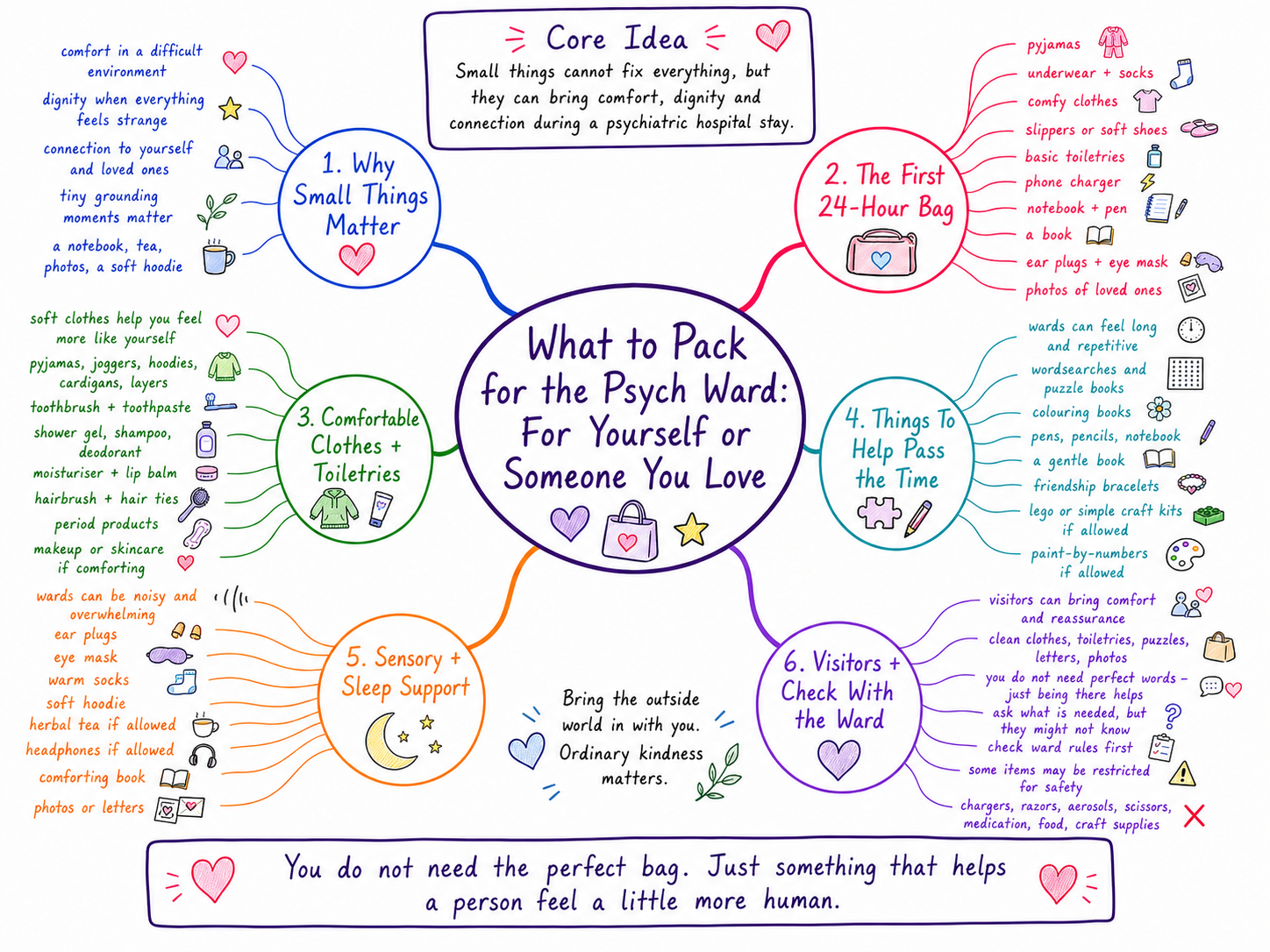
The first 24-hour bag
If someone is being admitted and you only have a short amount of time to pack, I would focus on simple basics.
Useful things to pack include:
Pyjamas
Underwear
Socks
A favourite hoodie or jumper
Comfortable clothes
Slippers or soft shoes
Basic toiletries
Phone charger
Notebook for journalling
Pen
A book
Ear plugs
Eye mask for sleeping
Photos of loved ones
The aim is not to pack everything. It’s to make the first day or two feel slightly less frightening and disorientating.
Comfortable clothes
Soft clothes are best.
One of my friends brought me a comfortable matching top and bottoms, socks and slippers. Things like that can really help, because psychiatric wards are not calm or cosy places.
Comfortable clothes can make you feel more like yourself, especially when everything else feels unfamiliar.
Good options might include:
Soft pyjamas
Jogging bottoms
Loose tops
Hoodies
Cardigans
Warm socks
Slippers
Clothes that are easy to put on and take off
Layers can be useful too, because wards can be too hot, too cold, or somehow both depending on the time of day.
Toiletries and feeling human
Toiletries are not just practical. They can help someone feel like a person again.
Things like brushing your teeth, washing your face, moisturising, doing your hair or even putting on makeup can be small acts of self-respect when you feel completely unlike yourself.
Useful toiletries might include:
Toothbrush and toothpaste
Shower gel
Shampoo and conditioner
Deodorant
Moisturiser
Lip balm
Hairbrush or comb
Hair ties
Period products
Face wash
Makeup, if that feels comforting
Any basic skincare items
For me, moisturiser helped. Makeup can help too, not because anyone needs to look a certain way in hospital, but because sometimes the ritual of getting ready can make you feel more connected to yourself.
Things to help pass the time
Time can feel strange on a ward. The days can be long, repetitive and hard to fill, especially if your concentration is poor.
Simple activities are best.
I found wordsearches really helpful. Puzzle books, colouring books, pens, a notebook, books, and small creative activities can all make a difference.
Things to consider packing or bringing include:
Wordsearch books
Puzzle books
Colouring books
Pens or pencils
A notebook
A gentle book
Friendship bracelet materials
Lego
Simple craft kits, if allowed
Paint-by-numbers kits, if allowed
One of the things I had was a mini Bob Ross paint-by-numbers kit that a friend brought for me. That kind of small, contained activity can be really soothing because it does not require too much decision-making.
Friendship bracelet making is another good one. It gives your hands something to do, and it can feel calming without being too demanding.
Sensory and sleep support
Psychiatric wards can be noisy. They can also be erratic and overwhelming.
Ear plugs can be really useful. So can an eye mask for sleeping. Soft clothes, familiar smells, quiet activities and warm drinks can also help someone feel a little more regulated.
Useful things might include:
Ear plugs
Eye mask
Soft hoodie
Warm socks
Herbal tea, if allowed
Headphones, if allowed
A comforting book
Photos or letters
I was brought herbal tea, which felt comforting. Again, it’s not about the tea itself. It’s about having something gentle and familiar in a place that can feel very unfamiliar.
What visitors can bring
If you are visiting someone on a psych ward, it is worth asking them what they need - but they might not know.
They may be too unwell, too overwhelmed, or too disconnected to give a clear answer.
Some helpful things to bring might include:
Clean clothes
Socks
Pyjamas
A hoodie
Toiletries
Moisturiser
Puzzle books
A notebook and pen
A colouring book
Pens or pencils
Books
Ear plugs
Eye mask
Herbal tea or snacks, if allowed
Photos
Handwritten letters
Handwritten letters from family and friends meant a lot to me. When you are in hospital, especially when you do not feel like yourself, reminders that people love you can matter more than they realise.
Visitors do not have to arrive with perfect words or perfect gifts. Even just the act of showing up can be the thing.
Check with the ward first
Every ward has different rules, so it is always best to check before bringing certain items.
This is especially important for things like:
Phone chargers and cords
Glass bottles or jars
Razors
Aerosols
Scissors
Lighters
Medication
Food and drinks
Craft supplies
Anything sharp
Anything with long cords or ties
Expensive or sentimental items
Some things may be allowed on one ward and not allowed on another. It is not personal if something is refused. It is usually about safety.
If in doubt, call the ward and ask.
Visiting someone on a psych ward
Visiting someone in psychiatric hospital can feel awkward or scary if you have never done it before.
You might worry about saying the wrong thing. You might not know whether to talk about normal life or hospital life. You might feel upset seeing someone you love in that environment.
But the most helpful thing is often to just be normal with them.
Tell them about your day. Tell them small, ordinary things. Bring the outside world in with you. Offer a listening ear if they want to talk, but do not force them to explain everything.
You do not need to fix them.
You do not need to say something profound.
You do not need to fully understand what they are going through.
Just being there can help.
What people misunderstand about psych wards
I think one thing people might misunderstand is that we are comfortable in our surroundings.
The ward can become the place where you are living, but that does not mean it feels like home. Wards can be erratic, noisy, frightening or aggressive at times. It feels like living in a place that was never designed around softness, privacy, or personal identity. There may be shouting, alarms, bright lights, locked doors, staff checks, other patients in distress, and very little true privacy or quiet. I understand that this can be difficult for visitors to witness too, but the person in hospital is living through it every day.
That is why visits can matter so much.
Visitors are not just “nice extras.” They can be a lifeline. They can bring normality, familiarity and proof that you have not disappeared from people’s lives.
They can remind someone that they are not just a patient. They are still a friend, sibling, child, partner, parent, colleague, artist, reader, tea drinker, puzzle-doer, hoodie-wearer, person.
They still belong to the world outside.
If you are receiving visitors
If you are in hospital and people are visiting you, you do not have to perform wellness.
You do not have to be cheerful, articulate, or entertaining. You do not have to prove that you are getting better.
You are allowed to be quiet. You are allowed to be confused, embarrassed, or not feel like yourself.
Let people come as you are.
Being seen when you are unwell can feel exposing, but it can also remind you that you are loved beyond the ward.
Final thoughts
Packing for a psychiatric hospital stay is not really about stuff.
It’s about comfort. Dignity. Familiarity. Connection.
It’s about helping someone feel a little less alone in an environment that can feel frightening and unreal.
A visit can help someone remember that they are still connected to the people who love them.
You do not need to bring the perfect thing.
You just need to bring care.