A gentle space to reflect, understand yourself and find your way forward.
After a mental health crisis, it can take time to understand what happened, work out what helps and begin to trust yourself again.
I created The Recovery Workbook to offer somewhere to start. It brings together practical tools, reflective prompts and space to explore your own recovery, at your own pace.
While it draws on my experiences of being sectioned and rebuilding my life, it isn’t specific to bipolar disorder, psychosis or any other diagnosis. It’s a broader resource for finding your way after a mental health crisis, whether or not you’ve been in hospital or received a diagnosis.
You don’t need to have everything figured out. You can begin wherever feels useful.
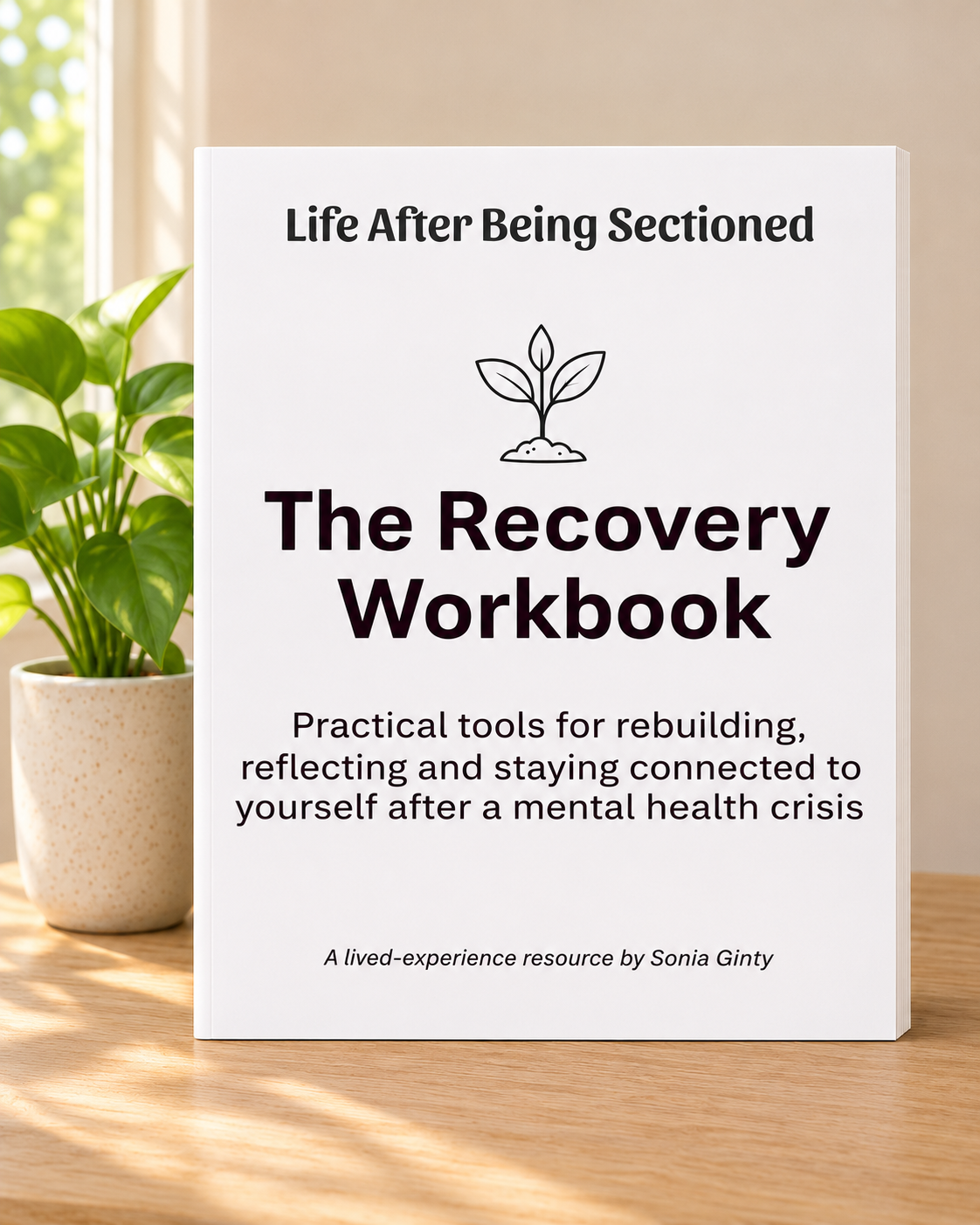
The Recovery Workbook is available as a paperback on Amazon or as a free downloadable PDF here in The Recovery Room members’ area
109 pages · 8 × 10 inches
Buy on Amazon (£5.99)
Download the PDF in The Recovery Room (free)
Who is The Recovery Workbook for?
This workbook is for anyone finding their feet after a mental health crisis, whether that experience is recent or something you’re still making sense of years later.
You might be newly home from hospital, rebuilding everyday routines or looking to understand your needs and patterns more clearly. You might want manageable next steps, somewhere to put difficult thoughts or tools to help explain what you need.
You can use it independently or bring pages into conversations with someone you trust.
What’s inside?
The Recovery Workbook offers practical activities and space for reflection to help you:
Navigate the early days after a crisis and identify manageable next steps.
Explore what recovery means to you.
Recognise your usual baseline and notice early warning signs.
Map the people, services and sources of comfort around you.
Track mood, sleep and changes in a week-to-view tracker.
Explore your patterns and develop personal warning signs and crisis plans.
Reflect on what happened, whenever you feel ready.
Practise grounding and a little kindness towards yourself.
Make space for creative reflection through writing, drawing and other ways of expressing yourself.
There’s no requirement to complete every page or work through it in order. You can write a little, draw, skip something or return another day.
Why I created it
After my own mental health crises and hospital admissions, I needed time, support and ways to understand what I’d been through.
Over time, tools shared through psychoeducation and conversations with peers helped me recognise my patterns, explain my experiences and understand what supports me.
I brought those ideas together with my own reflections to create a workbook I would have valued early on during my recovery: somewhere to gather the pieces, notice what helps and think about what comes next.
My hope is that it helps you feel a little less alone and more confident about understanding and expressing your needs.
Use it in your own way
Recovery doesn’t follow a neat sequence, and your workbook doesn’t have to either.
Some days, you might feel like exploring a reflective question. On others, noting how you slept or identifying one small thing that could help might be enough.
You can choose what feels useful and leave the rest. If a page feels too much, it’s okay to pause and come back to it with support, or leave it altogether.
Get the paperback on Amazon
If you prefer having something physical to flick through, write in and return to, the paperback offers a convenient, ready-to-use copy.
Its spacious 8 × 10-inch format gives you room to write, doodle and make the pages your own. There’s also four bookmarks I made at the very end for you to colours in and cut out to use in the workbook.
Paperback · 109 pages · £5.99
Buy The Recovery Workbook on Amazon
Download the free PDF
I also want the workbook to be accessible to people who would find it helpful, so a free PDF is available in The Recovery Room, the free members’ area of Life After Being Sectioned.
Register for a free account, or sign in, to download the workbook and print the pages you’d like to use.
The paperback and PDF contain the same workbook, so you can choose whichever format suits you.
The Recovery Workbook is a lived-experience resource for personal reflection and support. It does not replace professional mental health care.