When Being Sectioned Feels Like It Ruined Your Life (And How to Rebuild)
If you typed those exact words into a search bar today, I want you to take a slow, deep breath. You're not in trouble. You're not a failure. And most importantly, you're completely allowed to feel exactly how you feel right now.
When you're discharged from a psychiatric ward, the clinical team often treats "survival" as a success. They hand you your paperwork, manage your medication adjustments, and send you out the door. But they rarely prepare you for the emotional echo that follows.
The truth that nobody tells you is this: being detained under the Mental Health Act can feel like a violent fracture. It can feel like your autonomy was stripped away, your privacy was violated, and your trust in yourself - and the world - was completely shattered.
It's entirely normal to look around at your relationships, your routine, and your mind, and think: This ruined my life.
Your life wasn't ruined - it was violently interrupted
Feeling angry, grieving your past self, or feeling deeply traumatised by the system doesn't mean you are broken. It means you're a human being responding to a highly distressing event.
You might feel like you are standing in the wreckage of who you used to be, wondering how to rebuild. The good news is that you don't have to rebuild your entire life today. You don't even have to do it this month.
There's a life after being sectioned. It will look different than it did before, but different doesn't mean ruined.
I know exactly how heavy this feeling is because I have stood right where you are standing.
I don't even remember the day I walked out of the hospital gates after my first admission for an acute psychotic episode in 2020, but I know I was with my brother, and I must've been clutching a plastic bag of my belongings and a packet of discharge papers. The doctors probably told me I was "well enough to leave," but inside, I felt like a ghost. My autonomy had been taken from me, my routine was obliterated, and the shame felt suffocating. I looked at the wreckage and truly believed that being sectioned had permanently ruined my life.
It took me a long time to realise that the hospital team had stabilised my crisis, but they hadn't given me a map for the aftermath. I had to learn how to trust my own thoughts again without constantly looking over my shoulder for another relapse.
If you're mourning the person you were before you went into that ward, please know this: your life hasn't ended. It has been violently interrupted. And together, we can figure out what comes next.
Naming the Invisible Fallout (Why It Feels So Hard Right Now)
When you leave the hospital, people often expect you to be relieved. They might think that because you're back in your own bed, everything should naturally return to normal. But recovery from a psychiatric admission isn't like recovering from a broken leg. The deepest wounds are the ones people can't see.
If you're struggling to adjust, it's likely because you are navigating these three invisible battles all at once:
Hyper-Vigilance (The Fear of Your Own Mind)
After experiencing a severe crisis or psychosis, you might find yourself constantly policing your own brain. Every time you feel slightly sad, you wonder if it’s depression. Every time you feel happy or excited, you panic that it’s mania. Living in constant fear of your own emotions is exhausting. It makes you feel like a stranger in your own skin, waiting for a relapse that might never come.
The Relationship Shift (Shame and "The Look")
Coming home means facing friends, family, or coworkers. Even when people love you and mean well, you might notice a shift in how they treat you. You might get "the look" - that fragile, overly cautious gaze where people tip-toe around you like you're made of glass. Dealing with the stigma, the awkward silences, and the intense shame of explaining where you’ve been can make you want to lock your door and isolate from the world completely.
Systemic Shock (Processing Institutional Trauma)
Being sectioned means losing your basic human rights for a period of time. You didn't choose when to wake up, what to eat, or when you could go outside. Having your autonomy stripped away is a traumatic event in itself. When you suddenly get that freedom back, the real world can feel loud, overwhelming, and terrifying. Your nervous system is still stuck in survival mode, processing the shock of being locked away.
If you are experiencing any of these things, please understand: you are not broken. Your nervous system is simply trying to process a massive psychological shock.
Shifting the Perspective: "Ruined" vs. "Interrupted"
When you are sitting in the middle of deep emotional debris, it feels entirely accurate to say your life is ruined. The word "ruined" implies a permanent end - a broken vase that can never be glued back together, a burnt-down house that can never be lived in again.
But I want to offer you a different word to hold onto today: Interrupted.
Being sectioned is a violent, sudden interruption to your timeline. It’s an unexpected pause button that was forced upon your career, your relationships, your hobbies, and your daily life. It feels like someone ripped out several chapters of your book without your permission.
But an interruption is not a final destination.
The Earthquake Analogy
Think of a severe mental health crisis and a hospital admission like an unexpected earthquake. The ground shook, things fell off the shelves, and the structure of your daily life collapsed. Right now, you are standing in the immediate aftermath looking at the dust.
It’s completely unfair that you have to clean up a mess you didn't ask for. You are allowed to be angry about the rubble. But just because the old structure is damaged does not mean the ground underneath you is gone.
The foundations of who you are - your kindness, your resilience, your unique quirks, and your capacity for joy - are still there, buried beneath the shock.
Your story didn't end inside that ward. The intermission was painful, confusing, and terrifying, but the curtain is going up again. You get to decide, slowly and entirely on your own terms, exactly what you want to rebuild on top of this new landscape.
4 Simple, Low-Energy Steps to Start Reclaiming Your Life
When your autonomy is taken away from you in a hospital ward, your sense of control over your own life vanishes. Rebuilding doesn't happen by making massive life changes all at once. It happens by taking back control over the tiny, microscopic details of your day.
If you are feeling completely overwhelmed, pick just one of these low-energy actions to try today:
Practice "Micro-Autonomy"
In the hospital, someone else decided when you woke up, what you ate, and when the doors were locked. You can start healing that trauma by intentionally making tiny choices today. Pick exactly what cup you want to drink your tea out of. Decide exactly what time you want to step outside, even if it's just for sixty seconds. Explicitly tell yourself: "I am doing this because I choose to." Remind your nervous system that you are back in the driver's seat.
Control Your Sensory Environment
Psychiatric wards are notoriously loud, brightly lit, and unpredictable. Your nervous system might still be stuck in a state of high alert from that environment. Give yourself permission to curate a "sensory sanctuary" at home. Dim the lights, wear your softest clothes, use noise-canceling headphones, or sit in total silence. Softening the world around you gives your brain a chance to finally drop its guard and rest.
Separate Your Identity From Your Diagnosis
You’re a human being who experienced a severe medical and emotional crisis; you are not a "psychiatric patient" as a permanent identity. You’re still a person who likes certain music, has specific opinions, and holds unique memories. Spend five minutes doing something entirely unrelated to mental health. Listen to a favorite nostalgic song, look at a hobby website, or watch a comforting comedy. Remind yourself of the person you are outside of a hospital gown.
The "No Expectations" Rule for 30 Days
Lower the bar completely. For the next month, your only job is to exist, eat, sleep, and breathe. If you didn't reply to a message, that’s okay. If your room is messy, let it be messy. Forgiving yourself for being tired or sad is the fastest way to lower your baseline anxiety. You are recovering from a major event, so treat yourself with the same gentle patience you would give a friend recovering from major physical surgery.
You are here, you are safe, and your story is still being written.
Welcome back to the outside world.
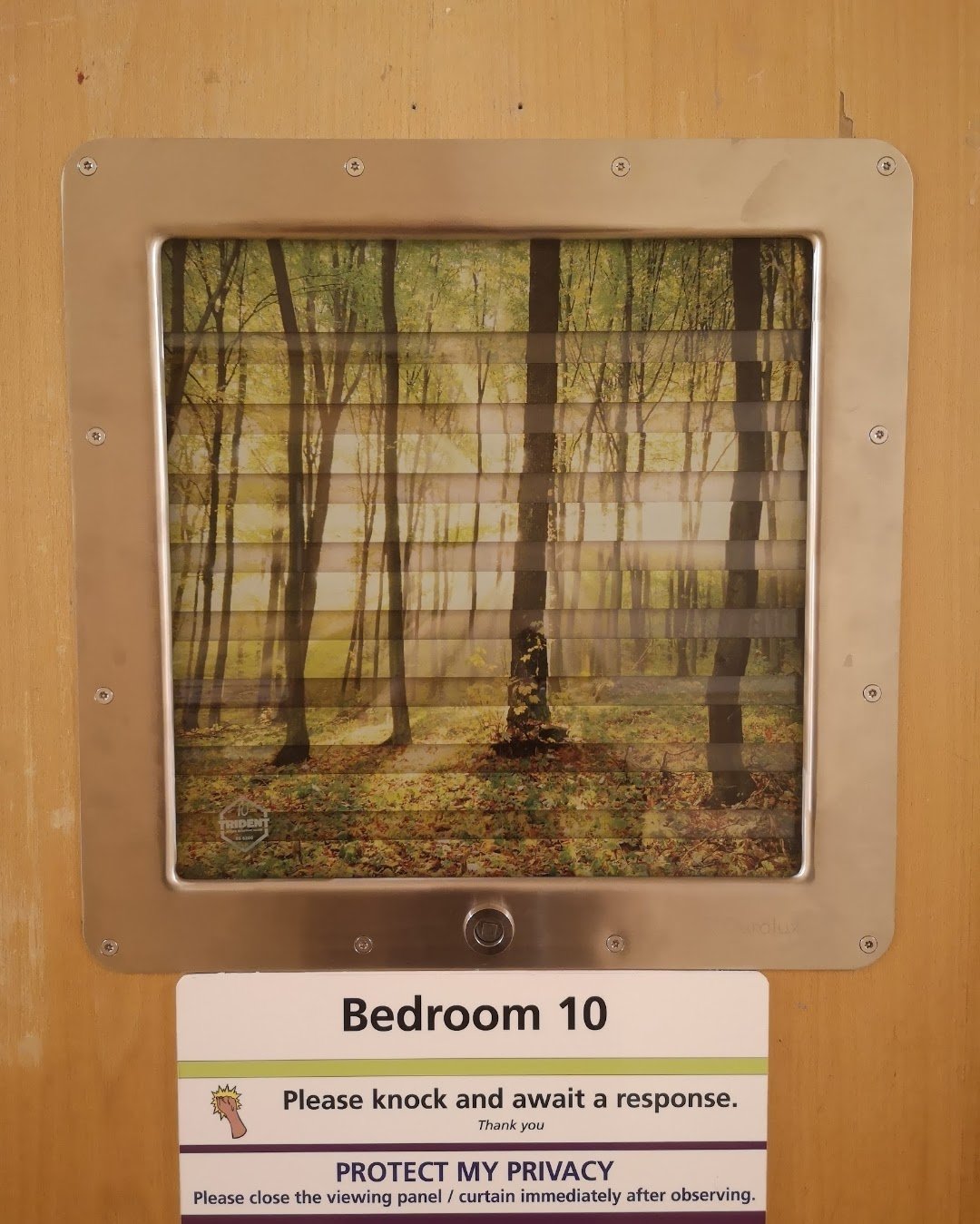
An observation window on my last admission’s hospital bedroom door labelled Bedroom 10, featuring a woodland privacy curtain behind secure glass.