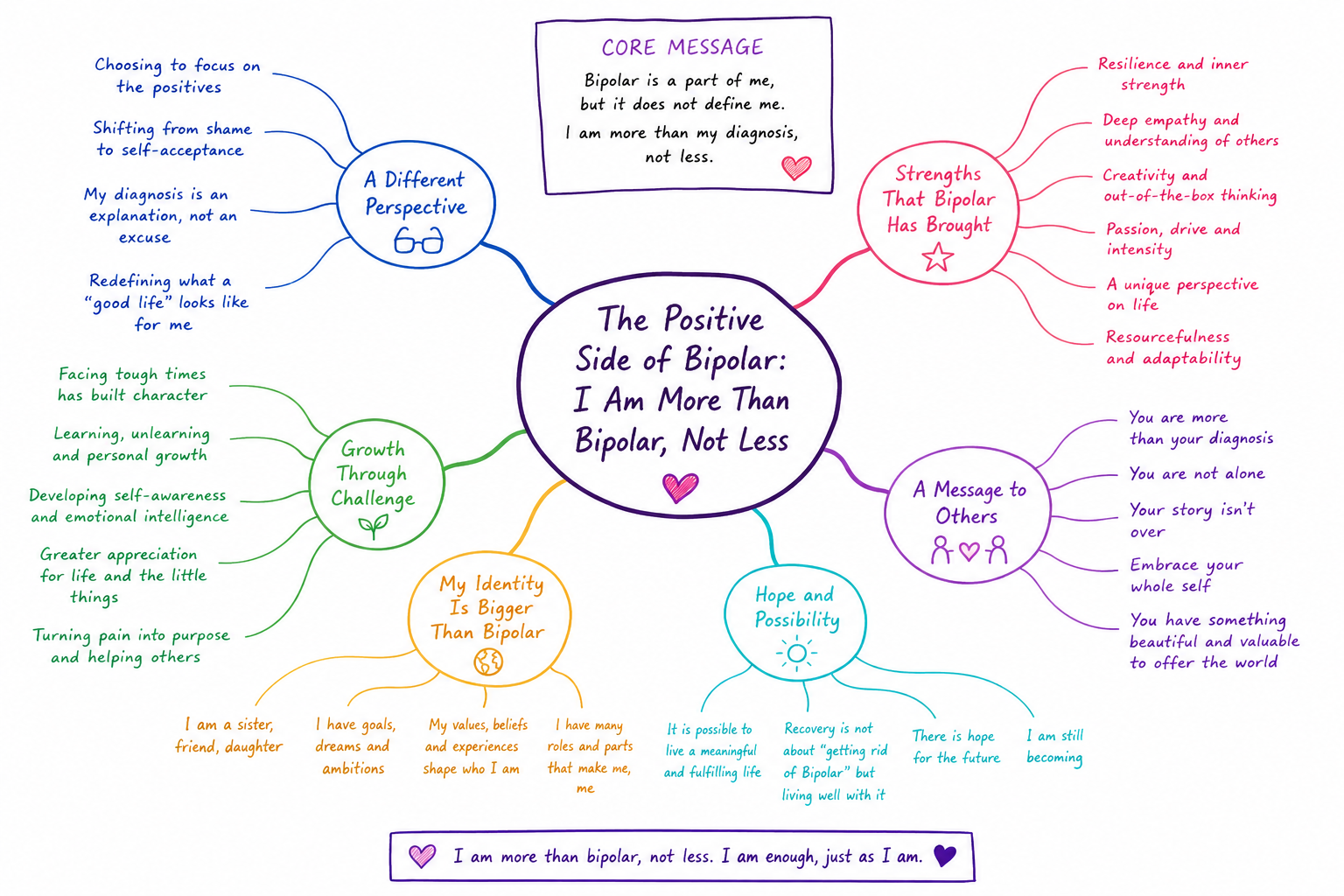
The Positive Side of Bipolar: I Am More Than Bipolar, Not Less
A reflection on the strengths that can grow through living with bipolar disorder.
When people talk about bipolar disorder, they usually talk about the hard parts.
The episodes.
The risk.
The hospitalisations.
The medication.
The fear of relapse.
The impact on work, relationships, identity and confidence.
And those things are real.
Bipolar disorder can be frightening, disruptive and life-altering. I don’t want to romanticise it or pretend that mania is just “creativity” or depression is just “depth.”
But I also don’t want the whole story to be fear.
There is already so much online about what can go wrong. I think we also need space to talk about the parts of ourselves that survive, grow, and still shine.

1. Emotional depth
Bipolar disorder can come with emotional intensity.
That intensity can be painful and overwhelming, but it can also mean feeling beauty, love, music, grief, connection and hope very deeply.
Sometimes I wish I felt things less. But my emotional depth is also part of how I love, create, understand and care.

2. Creativity
I don’t believe you need to be unwell to be creative.
But I do think my emotional range has shaped how I create. Writing, drawing and making things have helped me process what I’ve been through.
My creativity doesn’t come from being ill, but creativity has helped me survive and rebuild.
3. Empathy
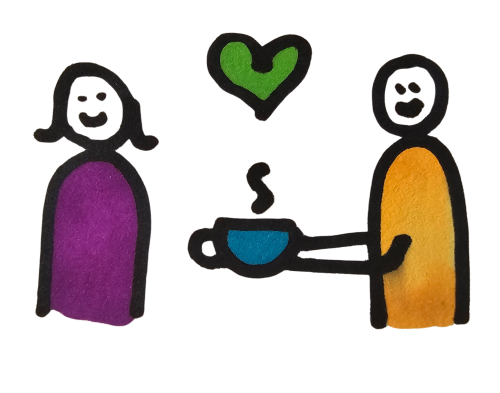
Going through mental illness has made me more compassionate.
It has helped me understand that people are often carrying things we cannot see. Someone can be struggling, frightened, messy or overwhelmed and still be worthy of dignity, patience and love.

4. Resilience
I used to think resilience meant being strong all the time.
Now I think resilience can be much quieter. Taking medication. Going to bed. Asking for help. Attending appointments. Starting again after life has fallen apart.
Bipolar disorder has forced me to rebuild, and that has taken strength.
5. Self-awareness
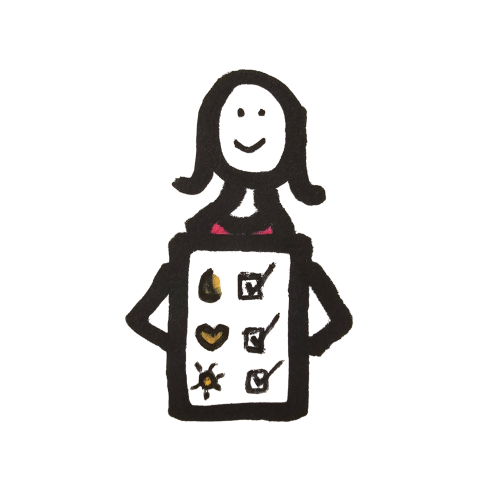
Living with bipolar disorder means I have had to get to know myself carefully.
I have learned what affects my mood, what helps me stay well, what my warning signs are, and why sleep, stress and support matter so much.
It can be exhausting, but it has also made me more honest with myself.
6. Sensitivity to meaning and connection
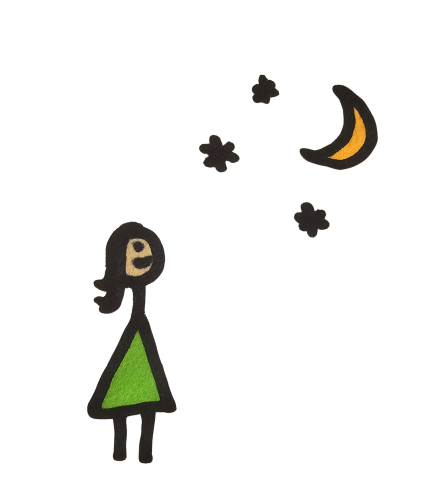
At times, meaning can become too intense, especially during mania or psychosis. Everything can feel connected, symbolic or significant in a way that becomes unsafe.
But when I am grounded, I still value my sensitivity to meaning.
I like reflecting on life, connection, spirituality, creativity and purpose. I don’t want to erase that part of myself completely.
7. Appreciation for ordinary life
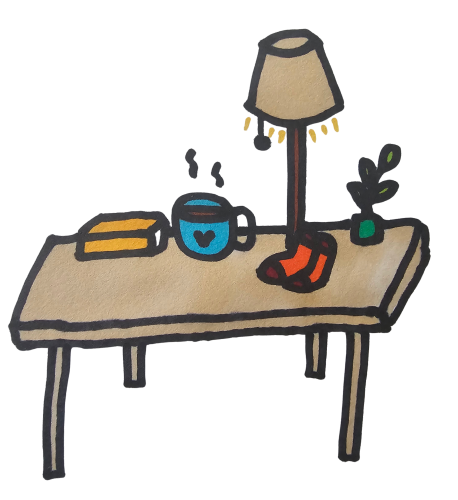
After crisis, ordinary life can feel precious.
A cup of tea. A good night’s sleep. A walk outside. A calm day. A message from a friend. A boring, normal week.
Bipolar disorder has made me appreciate stability in a way I didn’t before.
Stability is not boring. Stability is freedom.
8. Courage and honesty
It takes courage to live with something so misunderstood.
It takes courage to tell the truth about your mind, accept help, take your diagnosis seriously, repair things, and keep going after shame.
I don’t always feel brave, but I can see that I have been.
9. A sense of purpose
I don’t believe everything happens for a reason.
But I do believe we can make meaning from what happened to us.
For me, part of that meaning is wanting other people to feel less alone. It is one of the reasons I created Life After Being Sectioned.
I can’t change what happened, but I can use what I know now to help someone else.
10. The ability to reinvent yourself
Bipolar disorder changed my life in ways I didn’t choose.
It interrupted who I thought I was and what I thought my future would look like. But recovery has also helped me rebuild myself more honestly.
I have become clearer about what matters, what supports me, what drains me, and what kind of life feels sustainable.
I have lost things. But I have also become more myself in some ways.
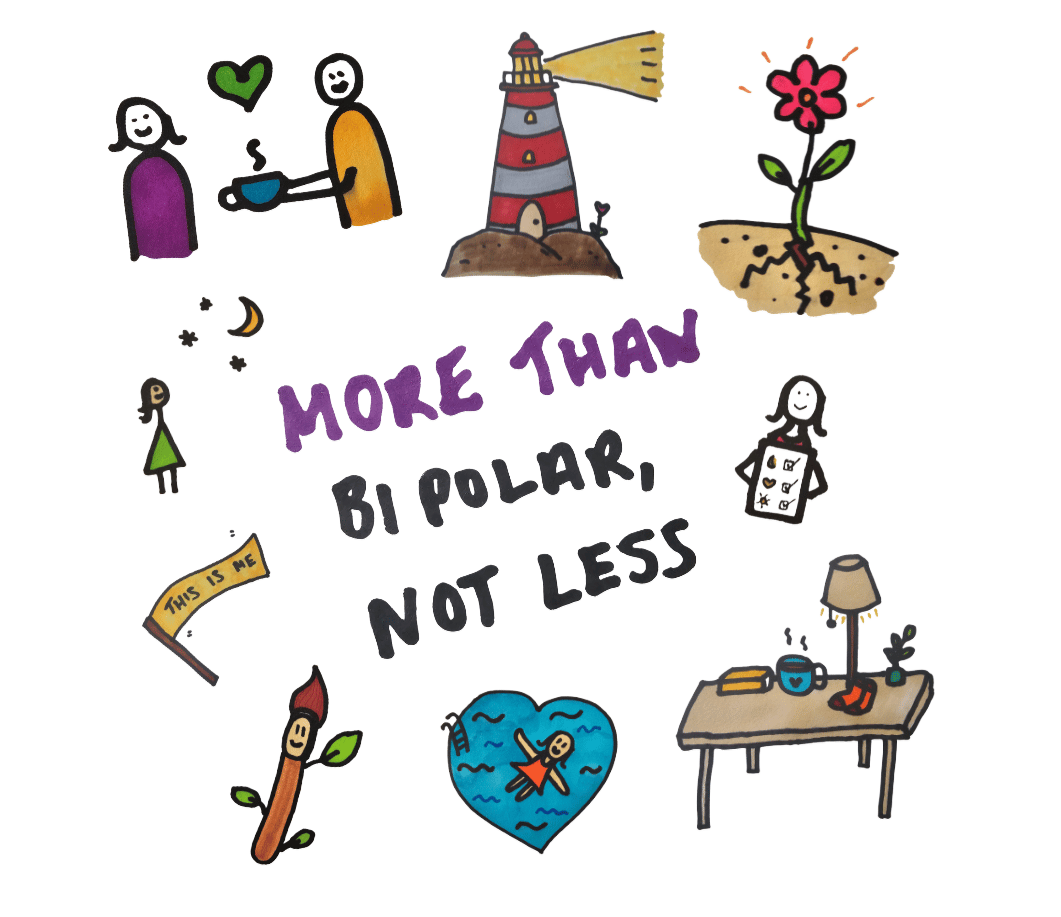
More than the diagnosis
I don’t think we need to call bipolar disorder a gift.
But I also don’t think we need to speak about it only as damage.
Bipolar disorder has brought real difficulty, disruption and risk into my life. But alongside the hard parts, I have found depth, creativity, empathy, resilience, self-knowledge, courage, purpose and the possibility of rebuilding.
These things don’t erase the illness.
But they remind me that I am more than it, not less.